Category: Spirituality

  • The Science of Concentration: 3 Proven Ways to Train Your Brain for Deep Concentration

    In 2013, a study conducted by Microsoft revealed something surprising.

    The average human attention span—the ability to stay focused on a single task without getting distracted—had dropped to just 8 seconds.

    And the irony is even more shocking. An internet survey found that nearly 95% of people never finish reading an online article.

    Now, with such a fragile attention span, success is a distant goal. In fact, you may struggle to perform even your everyday tasks effectively.

    But here’s the good news: Improving your focus and concentration is not as difficult as most people think.

    In today’s blog, you’ll discover several unique and powerful techniques that can dramatically improve your focus, productivity, and mental discipline.

    If you apply these methods consistently in your daily life, your productivity and success graph may never look the same again.

    So, let’s get started.

    1. The Wim Hof Method

    Wim Hof is a Dutch athlete who holds 26 Guinness World Records.

    And these records are so extraordinary that they go beyond what most people—and even many scientists—once thought was possible.

    For example, in 2013, Wim Hof remained submerged in ice for an astonishing 1 hour, 53 minutes, and 2 seconds.

    And that’s just one of many incredible records he has achieved.

    According to Wim, the secret behind these extraordinary abilities is a special breathing technique known as the Wim Hof Method.

    This method has transformed the lives of millions of people, from everyday individuals to Hollywood celebrities.

    And the reason it has become so popular is simple: Not only can it improve your focus and concentration, but many practitioners also report increased energy, better stress management, and improved mental resilience.

    So let’s take a look at how this powerful method works.

    The Wim Hof Method consists of three steps:

    1. Deep Breathing
    2. Breath Retention
    3. Cold Shower

    Step 1: Deep Breathing

    The breathing technique used in the Wim Hof Method is quite different from most traditional breathing exercises.

    That’s why it should always be practiced in a safe and comfortable environment.

    To begin, sit or lie down in a comfortable position.

    Then take a deep breath in through your mouth and let it out through your mouth.

    Repeat this process for 29th breaths.

    As you do this, your body becomes highly oxygenated, which can make you feel more energized, alert, and focused.

    Step 2: Breath Retention

    On the 30th breath, inhale deeply just as you did before.

    However, after exhaling, hold your breath for as long as you comfortably can without forcing it.

    When you feel that you need to breathe again, take one deep breath in and hold it for as long as you comfortably can.

    Then slowly exhale. At this point, one complete cycle of the Wim Hof Method is finished.

    Step 3: Cold Shower

    When it comes to the benefits of cold showers, the list is almost endless.

    When our body comes into contact with cold water, a variety of chemical and physiological reactions begin to take place.

    For example, the brain starts releasing dopamine, a neurotransmitter associated with motivation, alertness, and focus.

    As a result, many people experience increased concentration and mental clarity.

    Cold exposure may also stimulate the immune system and support the body’s natural defense mechanisms.

    In addition, it can help improve resilience to stress and leave you feeling more energized throughout the day.

    If you’d like to learn more about this method in detail, you can explore Wim Hof’s online courses and training programs.

    2. Reading Boring Texts

    There is a very interesting article titled Why Wildly Successful People Choose to Embrace Boredom.”

    I highly recommend reading it at least once.

    This article is especially for people who get bored very quickly.

    Here’s the thing:

    Your focus and concentration are tested the most when you’re bored or when you’re doing something that doesn’t interest you.

    Because the moment the brain starts feeling bored, it immediately begins to wander.

    And suddenly, you feel an irresistible urge to check your phone, scroll through social media, or find some form of entertainment.

    To improve your focus, try spending at least 30 minutes every day reading something that is both difficult and boring.

    For example, you could read scientific papers, research articles, technical reports, or any complex material that feels challenging to understand.

    The goal isn’t to enjoy it. The goal is to train your attention and if you do this consistently, two things will happen.

    First, you’ll start developing the ability that highly successful people possess—the ability to stay fully focused on an uninteresting task with the same level of concentration they would give to something exciting.

    Second, once you learn to concentrate on boring tasks, focusing on everything else becomes much easier.

    Because concentration is like a muscle.

    The more you train it under difficult conditions, the stronger it becomes in every area of your life.

    3. Pomodoro Technique

    The Pomodoro Technique is one of the simplest yet most effective methods for improving focus and training your brain to concentrate for longer periods of time.

    The concept is straightforward.

    Choose a single task and work on it with complete, undivided attention for 25 minutes. During this period, avoid all distractions. No checking your phone, no social media, and no multitasking. Your entire focus should remain on the task at hand.

    Once the 25-minute session is complete, take a short 5-minute break. Use this time to stretch, walk around, drink water, or simply relax.

    After the break, begin another 25-minute focused work session.

    Repeat this cycle four times. However, after completing the fourth session, instead of taking a 5-minute break, take a longer break of about 20 to 30 minutes. This gives your mind a chance to recover before starting the next round of focused work.

    One of the reasons the Pomodoro Technique is so effective is that it makes large tasks feel less overwhelming. Instead of trying to focus for several hours straight, you only need to commit to 25 minutes at a time. This reduces mental resistance and helps maintain a high level of concentration.

    The timing is also flexible. While the traditional method uses 25-minute work sessions and 5-minute breaks, you can adjust these intervals according to your preferences and work style.

    If you’d like additional support, you can download a Pomodoro timer application from the Play Store or App Store. These apps automatically manage work sessions and breaks, making it easier to stay consistent with the technique.

  • How Words Control Your Reality (Vaak Siddhi)

    Do you know that an ordinary person considers their speech (Vaani) to be nothing more than just a few words coming out of their mouth?

    To most, Vaani (speech) simply means this:
    A few words were spoken, and that’s the end of it.

    Because of this understanding, an average person speaks around 15,000 to 16,000 words every day.

    And due to this excessive talking, a normal person’s speech carries no strength, no power.

    Why? Because speaking is one of the most energy-consuming activities of our prana (life force).

    When a person speaks so much throughout the day, their speech loses the very energy the prana shakti—required to make it powerful.

    That is why, for an ordinary person, their speech remains nothing more than just a collection of words. And not only that An ordinary person’s words don’t even carry enough power for their own subconscious mind to believe them.

    That’s why when such a person says:
    “I am successful”
    “I am healthy”

    Their subconscious mind doesn’t even take these statements seriously.

    As a result, even after repeating affirmations for hundreds of days, their life remains exactly the same.


    So What’s the Solution?

    In this blog, we will understand:

    • What is Vaak Siddhi ?
    • And how you can make your words—your speech—truly powerful

    Vaani (Speech)

    Do you know that according to the Vedas, speech (vaani) neither begins with words nor ends with words?

    That is why the scriptures have divided speech into four different levels:

    • Para
    • Pashyanti
    • Madhyama
    • Vaikhari

    1. Para (The Source of Speech)

    Para is the state of speech where sound and your thoughts exist only in the form of pure consciousness.

    This is the stage where words are born, but they are neither thought nor spoken yet.

    According to the Vedas, the root of creation itself is Shabda Brahman which means sound itself is Brahman, the ultimate consciousness.

    And from this Para state, the entire universe originates.

    Those who attain Vaak Siddhi (mastery over speech) have their speech connected to Para level.

    Such people don’t really “speak” in the ordinary sense, it is the universe that speaks through them.

    And when such individuals say something, their words move toward their target with the speed of a bullet.

    And no matter what, those words manifest into reality.

    2. Pashyanti (The Inner Vision Stage)

    Pashyanti is the stage of speech where the expression of your vaani begins to move from the unmanifest to the semi-manifest.

    At this level, words start appearing like an image—like a seed that is quietly taking form within.

    If I explain it in simple terms, pashyanti is the stage where, before being spoken, words become a clear inner vision.

    3. Madhyama (The Inner Voice Stage)

    Madhyama is the stage of your speech where your thoughts begin to transform into language.

    It is here that your inner voice is born.

    And this is also the stage where a person starts losing their speech energy (vaani urja).

    Understand this carefully—

    Every person’s speech originates from Para and passes through Pashyanti.
    But when it reaches Madhyama, due to a lack of control over the mind,
    that person begins to drain their speech energy.

    4. Vaikhari (The Spoken Expression)

    Vaikhari is the stage where you actually speak, and the people around you can hear your words.

    At this level, your speech spreads into the air as vibrations.

    Now understand this—

    An ordinary person’s speech has no strength, no energy because what exists in their Pashyanti is different, what happens in Madhyama is different, and what they finally speak in Vaikhari is something else entirely.

    Let’s understand this with an example:

    Suppose, at the level of Pashyanti, you hate someone.
    At the level of Madhyama, your mind tells you, “This is not right.”
    But at the level of Vaikhari, you say “I love you” to that same person.

    Now what happens?

    Your Para, Pashyanti, Madhyama, and Vaikhari
    are no longer in the same alignment in the same rhythm.

    And because of this misalignment, your speech loses its power.


    Why a Yogi’s Words Become Powerful

    On the other hand, the speech of a yogi or a siddha becomes powerful because—

    What is inside them… is exactly what is outside.

    They speak purely, they speak truth, without any mixture or contradiction.

    And that is why their words carry such immense power.


    The Psychological Truth Behind This

    Now let’s understand this at a psychological level—

    When a person keeps lying in small, everyday situations, or even tells lies repeatedly as a joke.

    Their subconscious mind starts recognizing a pattern:

    “This person mostly speaks lies.”

    And once this belief is formed, their subconscious mind stops taking their words seriously.

    For the subconscious mind, their speech becomes nothing more than just empty words.


    Why Your Affirmations Don’t Work

    When you feel frustrated with your life and you declare:

    “Now I will completely change my life.”

    Even then your subconscious mind treats it as just another lie.

    That is why it doesn’t act on your resolution. That is why nothing truly changes in your life.

    So now the real question is:

    How can an ordinary person make their speech powerful?


    1. Honor Your Own Words

    People whose speech has no power, whose words feel empty, all share one common trait:

    Their words and their actions are not aligned. They say one thing, but they do something else.

    If we understand this at a psychological level—

    When a person lies in small, everyday situations, or fails to follow through on what they say, their subconscious mind starts learning:

    “This person is not serious about their own words.”

    For example—

    You say, “I will wake up at 5 AM tomorrow, no matter what.”

    But when you don’t wake up, your subconscious mind registers:

    “This person doesn’t do what they say.”

    And slowly, your words begin to lose their impact. If we understand this from a metaphysical perspective.

    When a person repeatedly sends contradictory signals to the universe saying one thing and doing another their messages stop being reliable.

    And when their words are no longer trustworthy, nothing happens when they speak.

    Understand this carefully

    When your thoughts, your spoken words, and your actions move in the same direction, they start strengthening each other.

    But the moment even one of these goes out of alignment, the other two also begin to lose their power.

    Now, to break this habit of your subconscious mind not taking you seriously, the first step is simple:

    Start honoring your own words.

    Make a few promises to yourself every day, and no matter what happens, fulfill them.

    These promises can be simple—waking up at 5 AM, reading 10 pages daily, exercising for 30 minutes anything.

    But once you commit, you must follow through. When you start fulfilling your promises daily, your subconscious mind slowly gets trained:

    “This person does what they say.” And because of this one shift, the power of your speech increases many times over.

    From a metaphysical perspective —

    When you start doing exactly what you say, your messages to the universe become trustworthy.

    Then your words are no longer just words—they become commands.

    And the universe begins to act upon them. That is why when a Siddha speaks, even if what they say is not yet true, the universe begins creating circumstances to make it true.

    Their words manifest. A powerful example of this can be seen in the story of Karna from the Mahabharata.

    A Brahmin cursed Karna that the wheel of his chariot would get stuck in the battlefield, and this would lead to his death.

    At that time, even the events of the war had not fully unfolded. And yet, circumstances aligned in such a way that his chariot wheel did get stuck, and that became the cause of his death.

    2. Silence (Maun Vrat)

    Now understand this—

    Just as fasting is done to purify the body, in the same way, silence is practiced to purify and strengthen your speech.

    You already know this—speaking is one of the most energy-consuming activities of your prana.

    That is why, when you remain in silence, it’s not just your mental chatter that becomes calm.

    No

    By observing silence, the outward flow of your prana energy stops. And then, just like a battery, that energy begins to accumulate within you.

    And when you speak from that stored energy, your words become extremely powerful
    and start moving rapidly toward their target.

    If we look at silence from a scientific perspective — Silence has countless benefits.

    First of all, staying silent works like a dopamine detox for your brain.

    Dopamine detox means that due to constant overstimulation, the dopamine receptors in your brain that have weakened start slowly restoring themselves.

    As a result, your focus and your impulse control begin to improve.

    Research also suggests that even 2 hours of silence can increase the production of neurons in your brain.

    Which means your brain’s ability to create new neurons improves.

    But understand this carefully—

    Silence does not mean that you are quiet externally while your mind is still running endlessly inside.

    True silence means that Your energy should not turn into words and flow out of you.

    It is complete silence—both external and internal.

  • How Swami Vivekananda Inspired Nikola Tesla’s View of the Universe.

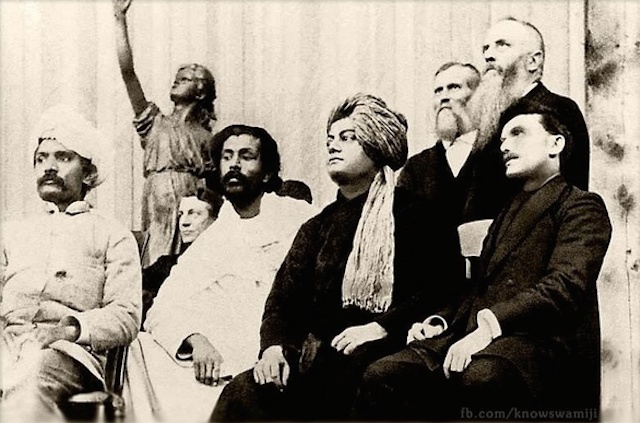
    Did you know that in 1893, when Swami Vivekananda traveled to America to attend the World Parliament of Religions, he met the great inventor Nikola Tesla?

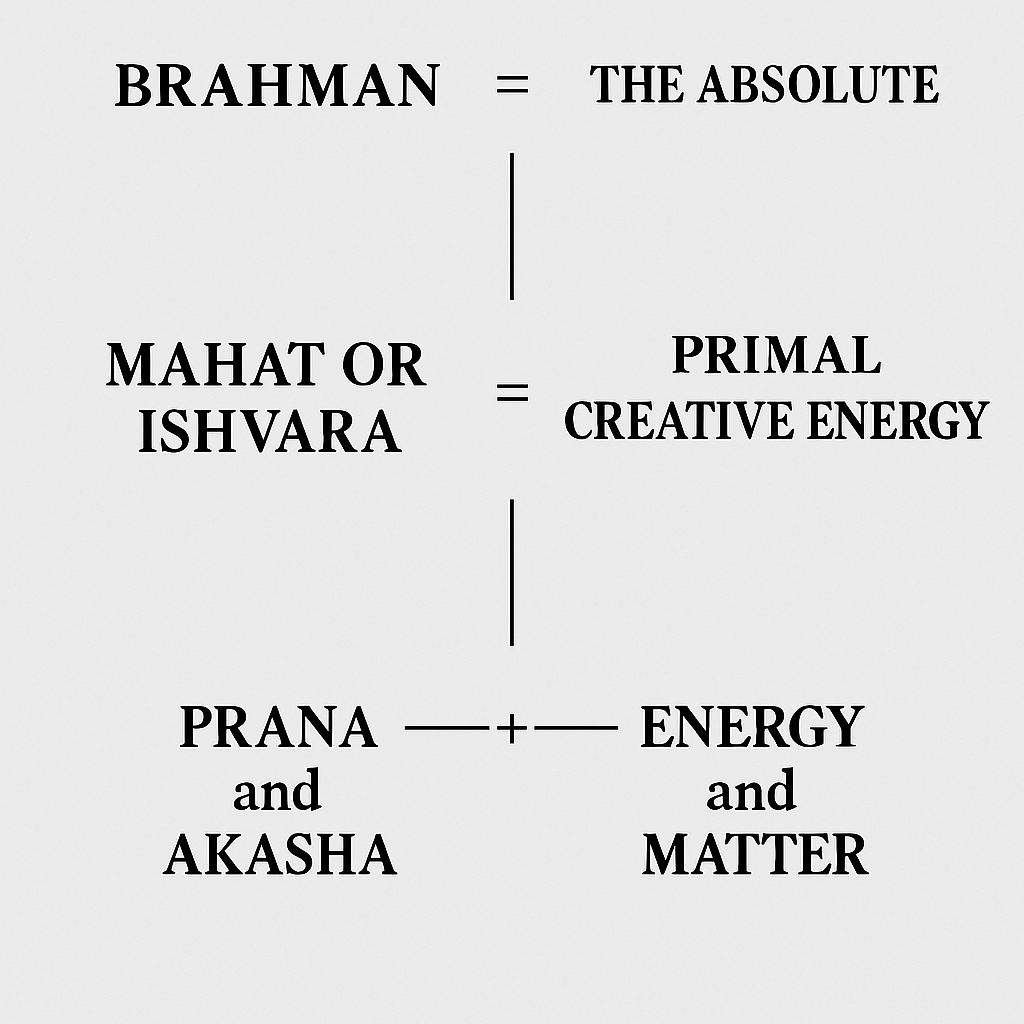
    During their meeting, Swamiji introduced Tesla to the ancient Indian concepts of Prana and Akasha. He explained how, according to Indian philosophy, Prana and Akasha together form the very foundation of the universe — everything that exists arises from their interaction.

    In one of his letters, Swami Vivekananda even illustrated this idea with a diagram.


    He explained that from the Brahman, the Absolute Reality, emerges Mahat or Ishvara — the primal creative energy. From this Mahat manifest Prana (energy) and Akasha (matter), which together give birth to the entire cosmos.

    And he asked Nikola Tesla to mathematically prove this very theory of the Vedas — that force and matter, that is, Akasha Tattva, are reducible to energy.
    However, due to the misunderstanding of certain Sanskrit terms, Nikola Tesla was unable to mathematically prove this concept.

    Yet, shortly after, Tesla wrote an article titled “Man’s Greatest Achievement,” in which he echoed the same insight — describing how Prana and Akasha combine to create everything in the universe.

    Interestingly, Swami Vivekananda had already written something very similar in his book “Raja Yoga” (Chapter 3). He described how Akasha, the subtle element, manifests into gross form — the physical world we can see and touch — through the power of Prana.

    And just as Prana manifests the outer universe, the same Prana energy flows within us, manifesting as our thoughts.
    It is this very energy that the ancient sages learned to control through the practice of Pranayama — the art of mastering the life force.