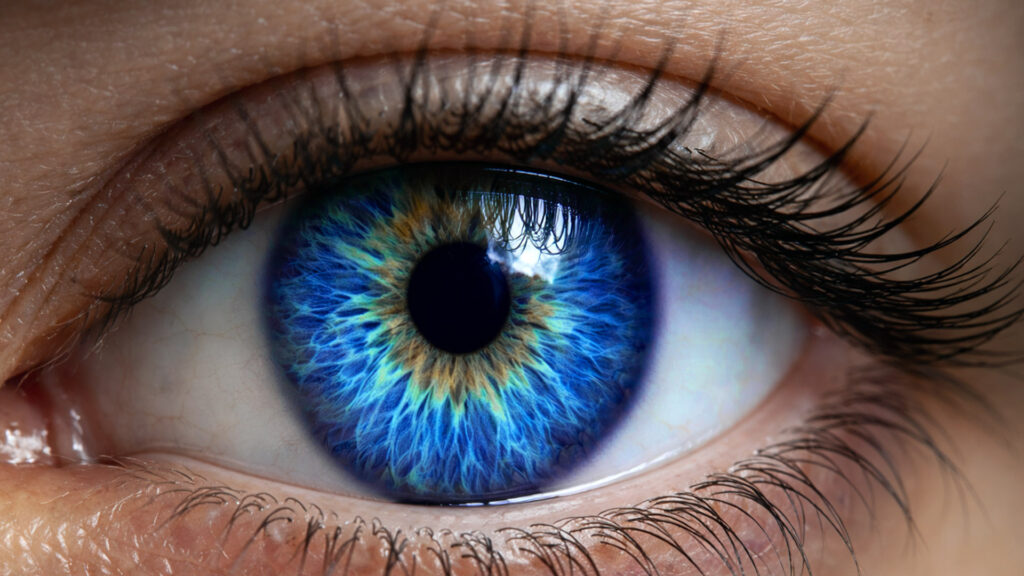
“To acquire knowledge, one must study, but to acquire wisdom one must observe.”
Marilyn Vos Savant
Observation is such an art that when you start observing, the mysteries of this universe begin to unfold before you like a flower.
Charles Darwin, only because of his power of observation, gave the world the theory of evolution. And Nikola Tesla, in his childhood used to sit near flowing water and observe it for hours and the famous biologist Louis Agassiz, to increase the observation power of his students, used to give them different kinds of animals to observe.
For example — Once, Louis gave one of his students a fish to observe and told him to write as much detail as possible about that fish. Then the student observed the fish for around 100 to 150 hours over the next one and a half to two weeks. After observing the fish for so many hours, the secrets of that fish slowly began to reveal themselves before his eyes. The student started seeing even the smallest details very clearly— details which perhaps he could never have known without observation. That is why I also observed the fish in my aquarium for around 3 days, 9 to 10 hours daily. And in those 3 days, I started understanding such details about the fish which perhaps I could never have known without observing.
Observation is truly a very powerful practice. When a person starts observing their thoughts, feelings and emotions, then that person gradually begins to understand their own reality. This is called inner observation.
When a person starts observing the outer world, then that person gradually begins to understand the reality of this world.
Now, what do I mean by “reality” here? Look Princeton University in America conducted a study. In this study, some police officers were shown a video in which Person A and Person B were both taking something out of their pocket— Half the time it was a phone, and half the time it was a gun. The police officers had to quickly tell whether the person was taking out a gun or a phone.
You won’t believe this: when the officers saw Person A, about 85% of the time, they reported that he was pulling out a gun. And when they saw Person B, around 85% of the time, they reported that he was pulling out a phone. But in reality, both Person A and Person B were taking out a gun and a phone equally, half the time each.
The only difference was that Person A had a criminal background, which the police officers already knew. Because of their past experiences and emotions related to Person A, their brain showed them what they wanted to see, not the actual reality. And this is exactly what happens with all of us.
The way information is processed in our brain is such that when we see something, according to science, that information first travels through the low road to a part of the brain called the brainstem, where it gets mixed with our emotions. Then, when that information is processed through the high road, our brain shows us what we want to see, not necessarily reality. Now it’s not always the case that what we see is wrong, but still, this happens often. That is why Jiddu Krishnamurti said:
“The ability to observe without evaluating is the highest form of intelligence.”
Look, our brain cannot judge and observe at the same time.
Either you can judge something, or you can observe it. But you cannot do both at once. And when you judge something, you cannot truly understand it. That is why Anthony de Mello wrote in his book Awareness: “What you judge, you cannot understand.” Just like painting, dancing, music, or any other skill, observation is also an art—a skill that can be improved over time through practice. But to increase the power of observation, the mind needs to remain calm. Because of the Default Mode Network (DMN) in the brain, our monkey mind never stays quiet, And thoughts keep coming one after another. Because of this, we remain stuck in our own thoughts and are not able to observe anything properly.
There is a very famous book called How to Think Like Leonardo da Vinci.
In its 7 methods to increase genius, one method is Sensazione.
In this method, the author explains that Leonardo da Vinci used his senses very effectively, especially his sight. Look—our concentration, our observation, and the stability of our mind are directly connected to our eyes. In the book Ekagra Man, in the chapter Achal Drashti, the author writes that:
As long as the mind is restless, our vision also remains restless. And once the mind becomes calm, our vision also becomes calm.
You can also say it like this—
When the vision is restless, the mind remains restless, and when the vision becomes steady, the mind also becomes calm.
On this, Kabir writes:

This means that when we are awake, the mind resides at the front of the eyes, constantly thinking about something. And the amazing thing is that when you sit peacefully and start observing things, the restlessness of your vision begins to disappear, and the observation power of your mind starts increasing rapidly. Look, there are many ways to increase observation power, but for now, please develop the habit of sitting in one place and observing anything you like.
In Upanishadic Dharana (Upanishadic concentration), Many methods are given, such as:
- Bahyakasha concentration
- Antarakasha concentration
- Chidakasha concentration
In the Bahyakasha concentration method, Bhoochari Mudra is described.
This mudra is specifically dedicated to stabilizing our vision—our eyes. And not only in Upanishadic Dharana, but in Vigyan Bhairav Tantra, out of 112 methods of liberation, 4 to 5 methods are directly related to our eyes.
I will gradually explain all these methods and mudras to you in the upcoming blogs.


Leave a Reply to Anshu Cancel reply